

 Sharon Erwin
Due to high production costs, the U.S. officially ended production of the one cent coin in November 2025, when the U.S. Mint struck its final circulating penny in Philadelphia. The decision saves taxpayers an estimated $56 million annually.
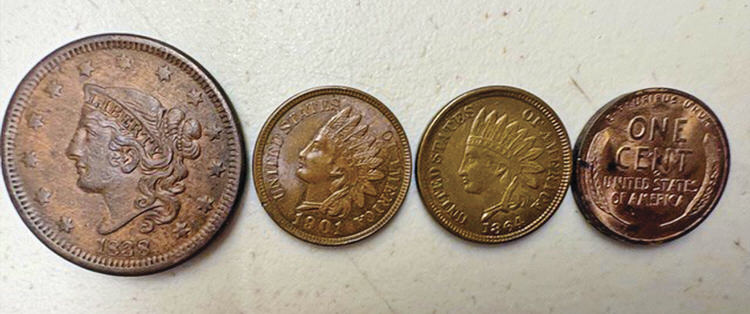
The cent can trace its lineage to the British half-pence. When the U.S.Mint was created in 1792, one of the first coins it made was the one cent coin. The image on the first cent was of a lady with flowing hair, who stood for liberty. The coin was larger and made of pure copper, while today’s penny is made of copper and zinc.
In 1857, Congress told the Mint to make the cent smaller and to mix the copper with nickel.
In 1862 everything changed. To finance the Civil War, the U.S. issued notes which were not tied to any metal currency. Soon enough, gold and silver were removed from circulation by everyone, any metal coin was kept sacred against the uncertainties of the war, including the cent. To fill the void, privately made cent substitutes were made by button makers and token manufacturers. Millions of these cent tokens were produced and used in major cities throughout 1863 and 1864. Before long, the Government saw what was happening and in mid-1864 they made the tokens illegal and made their own thin bronze cent to replace them.
In 1909, Abraham Lincoln became the first real person on a U.S. circulating coin. While the Lincoln portrait has remained the same since then, several different designs have been used on the reverse: Ears of Wheat (1909 to 1958), Lincoln Memorial (1959 to 2008), Four designs in 2009 as part of the Lincoln Bicentennial One Cent Program.
By the 1970s, inflation had eroded the value of the cent, who knew how low its worth would go? The price of copper was inching higher and higher, who knew how high it would go?
In 1982, the Mint changed the cent to a copper-coated zinc composition.
“Will the nickel be next?” The U.S. Government loses $85 million annually making nickels. It costs roughly 14 cents to produce and distribute a single five-cent nickel, resulting in a net loss of about nine cents per coin.
Are you curious about how coins and currency changes have reflected historical events? Then we suggest you come and check out the SaddleBrooke Coin Club which features an educational talk at each meeting. The Club meetings are held from 6 to 8 p.m. the second Thursday of each month (except June-July-August) in the Catalina Room located in the Mesquite Building, located at 38691 S. Mountain View Blvd. The next meeting will be on Thursday, Oct. 8. Our guest speaker will be Tim Filson, who will be discussing “Prison Tokens from the Nevada State Prison in Carson City.”