
 Vera Shury
What is neuroplasticity? It is the brain’s ability to heal some damaged neurons or find a detour around damaged neurons or injury in the body in the process of keeping you alive and functioning. Dead neurons stay dead, but you get new neurons as long as you are alive. Movement creates Brain-Derived Neurotropic Factor (BDNF).
Fear of aging seems to grow, because people believe change becomes harder over time. Applying neuroplasticity in your lifestyle helps you deal with life as it comes. The basics still apply—repetition but with a focus. And you want to tap into the desire for novelty. When there is a change to deal with emotionally or physically, practice deliberately with focus. Go slow and precisely to build the neurological pathway for the change you want or need. What fires together, wires together. In other words, the more often you repeat thoughts or movements, the stronger that pathway through the brain gets, and the connections stabilize, both good and not good. The mind cannot control the mind. It takes some sort of physical movement. That is why it is important for Parkinson’s disease recovery to move.
Adapting to life takes an open mind. Not adapting to the current situation probably leaves one behind. One of the best ways to use neuroplasticity is to get alert and set yourself up for 30 to 60 seconds with a visual focus. Repeat intensely and consistently, interspersed with random rewards to yourself (give yourself a treat).
When you take two steps, your eyes send a signal to your brain that you are moving ahead, which creates the production of dopamine, the pursuit chemical, which will keep you going.
When you get what you want or reach your goal, the adrenaline gives the reward.
Sleep to consolidate changes. Stay motivated (salience matters). Aim for 66 days.
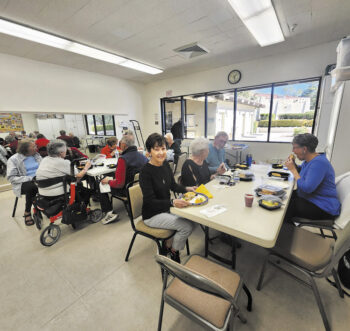
In this type of class, there are two purposes: 1) to build muscle mass to recover lost strength and functions, and 2) to counter the neurologic deficits that occur and to prevent the progression of the disease symptoms. We do this with weighted movements, education at every session, and sharing experience, strength, and support for one another—without whining.
We are listed in SaddleBrooke One since 2002 under Exercise and Support. Classes are Tuesdays and Thursdays from 12:30 to 2 p.m. in the SaddleBrooke One Arts & Craft Center in Room 3, next to the Gift Shop. All are welcome! We have quarterly support and educational meetings on the third Thursday. 2026 schedule: Feb. 19, April 16, Oct. 15, Dec. 17 (Holiday Party)
Call PWR! Neuroplasticity Coach Vera Shury at 520-275-8755 for 15 minutes of free coaching or email vera@libertyscience.com.
See www.pmdalliance.org for Parkinson’s info and support.